Why It Happens Here
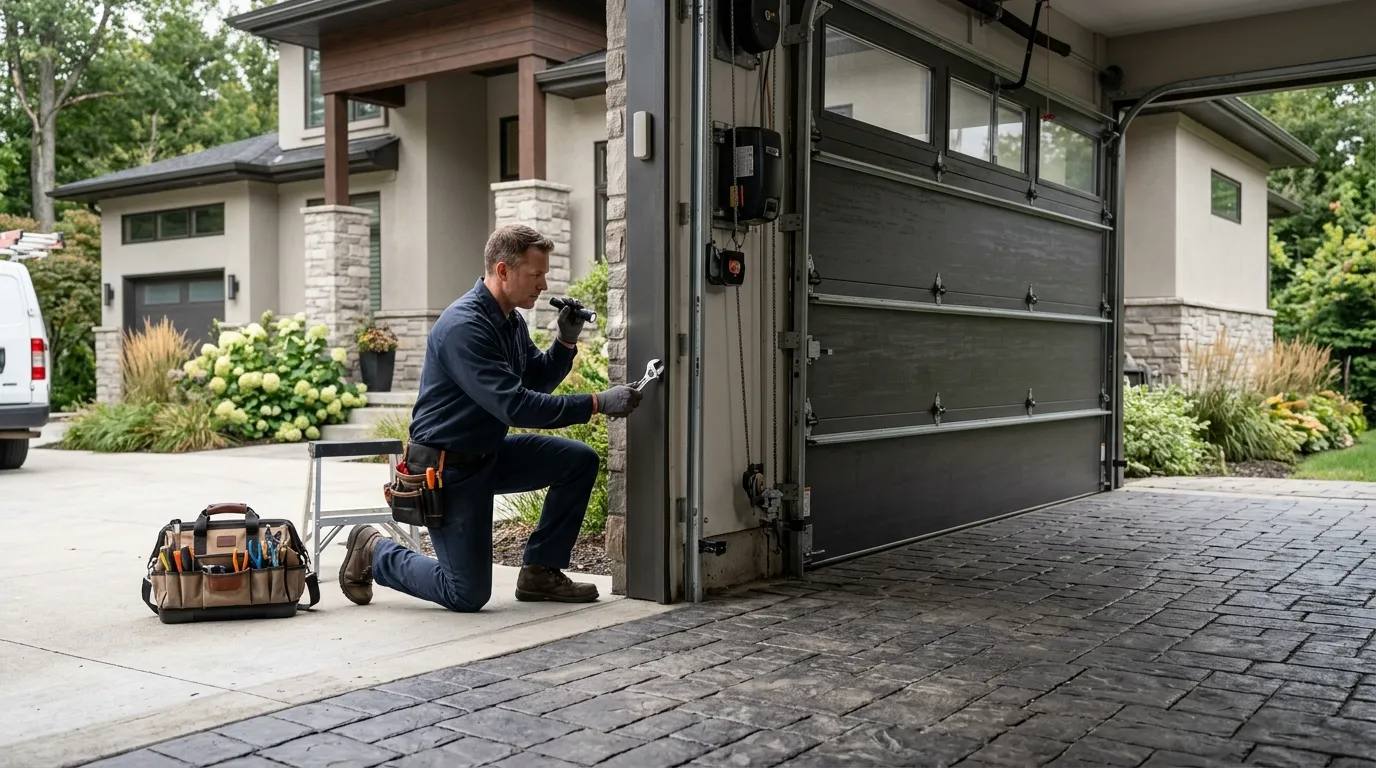
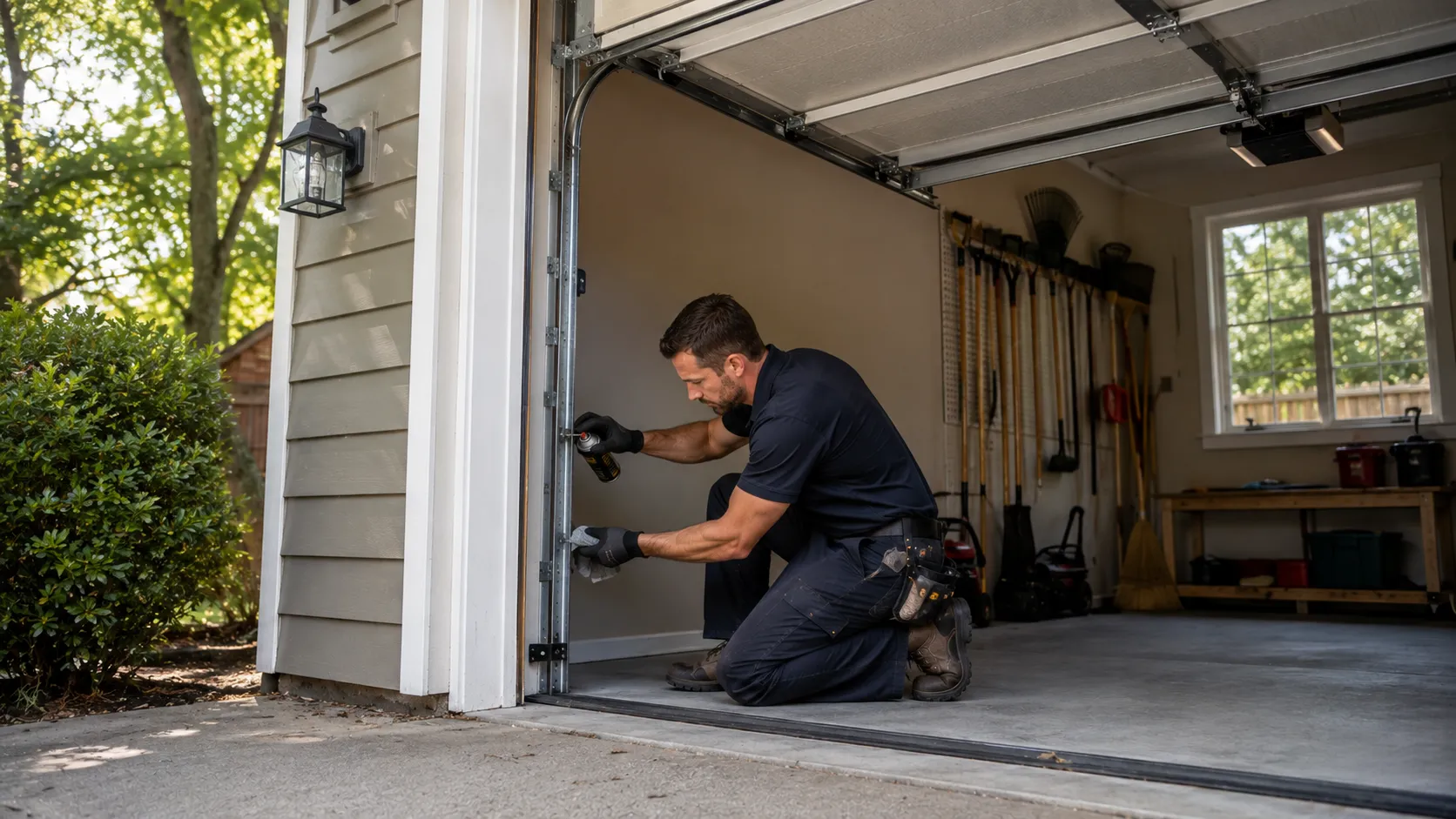
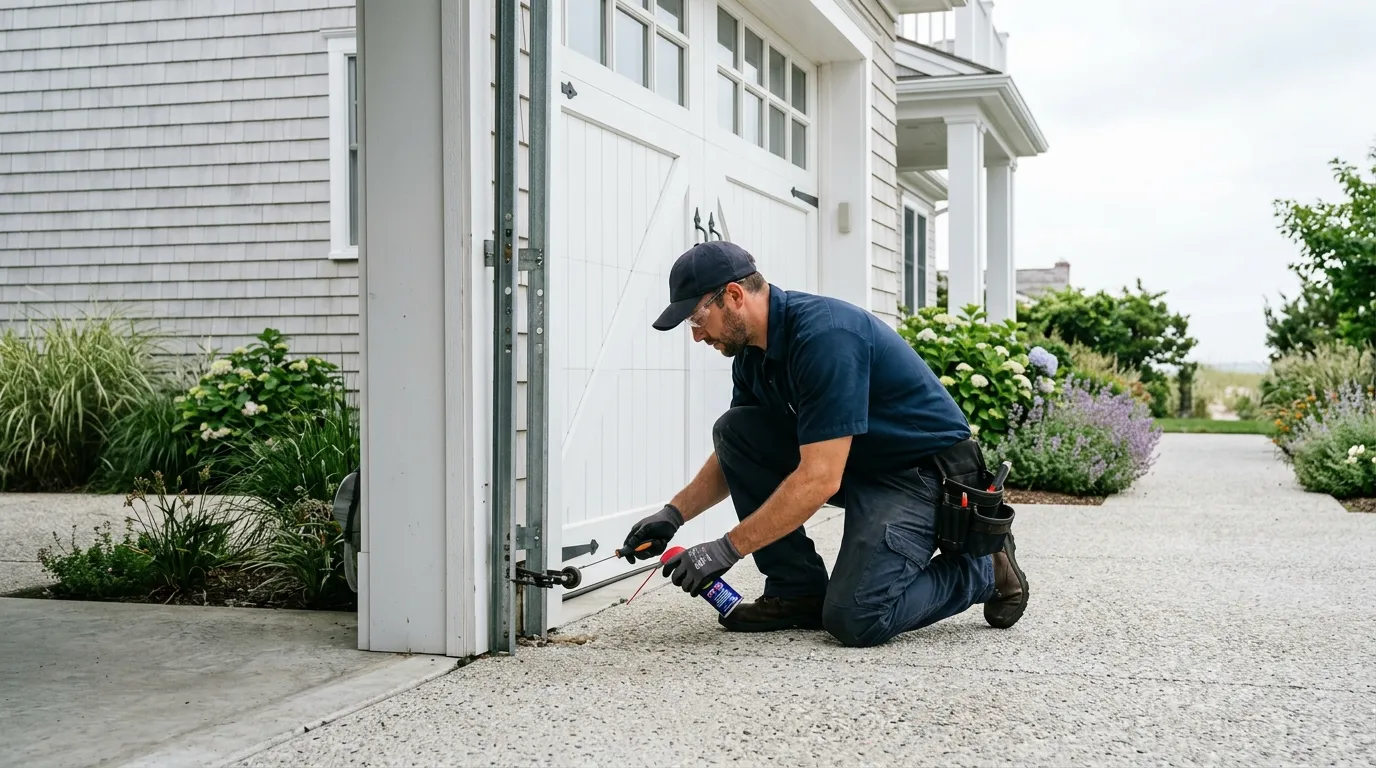
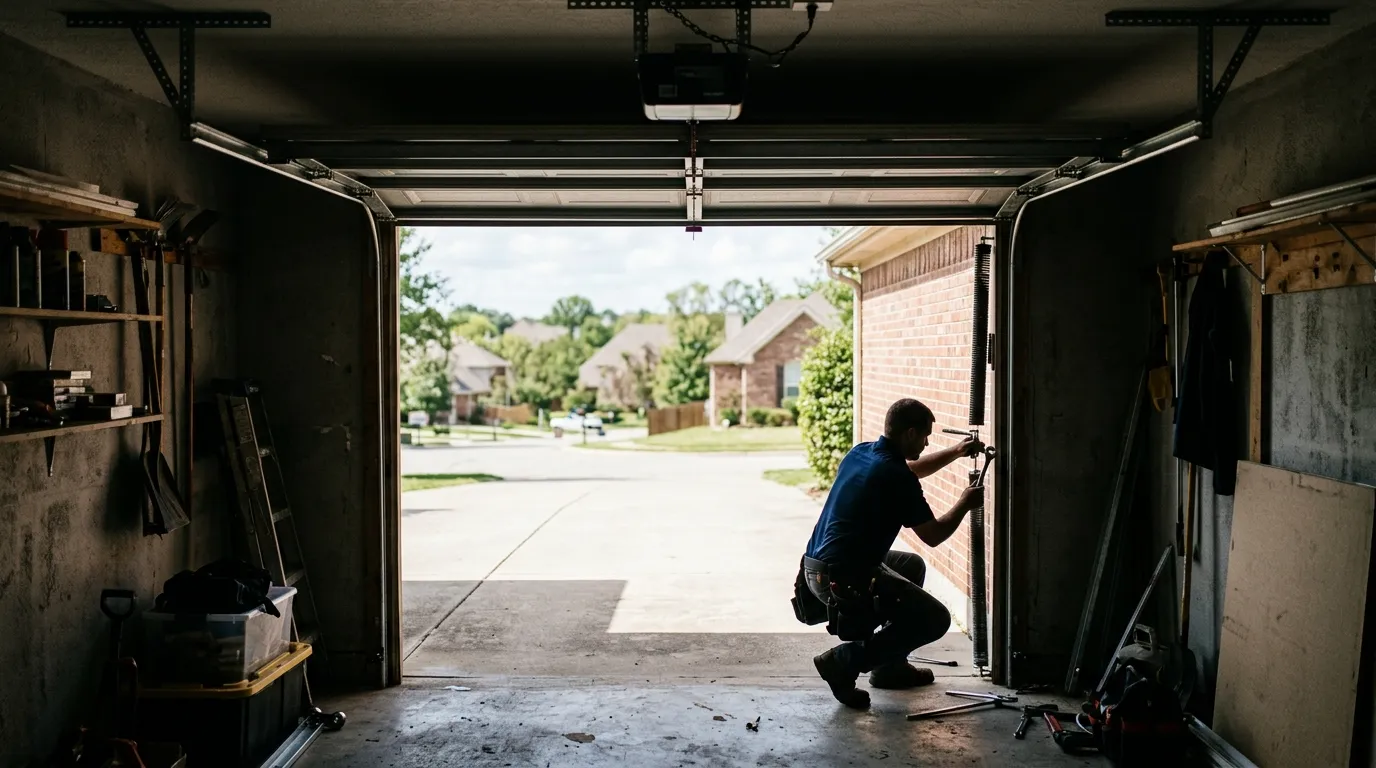
Tye's building stock runs newer than most of the rest of the service area. The median build year here is 1986, while the older sections we cover elsewhere - the ones that make up most of the areawide housing count - carry a median closer to 1973, with plenty of stock still standing from the 1960s and 70s. That gap matters on a commercial bay. A door installed when a Tye shop went up in the mid-80s has usually been through at least one spring replacement and maybe an opener swap by now, but the header bracket, the track brackets bolted to the jamb, and the framing itself are frequently still the originals from construction. Nobody touches those unless something forces the issue, because they don't wear out the way a spring does - they just sit there, slowly working loose or rusting at the fasteners.
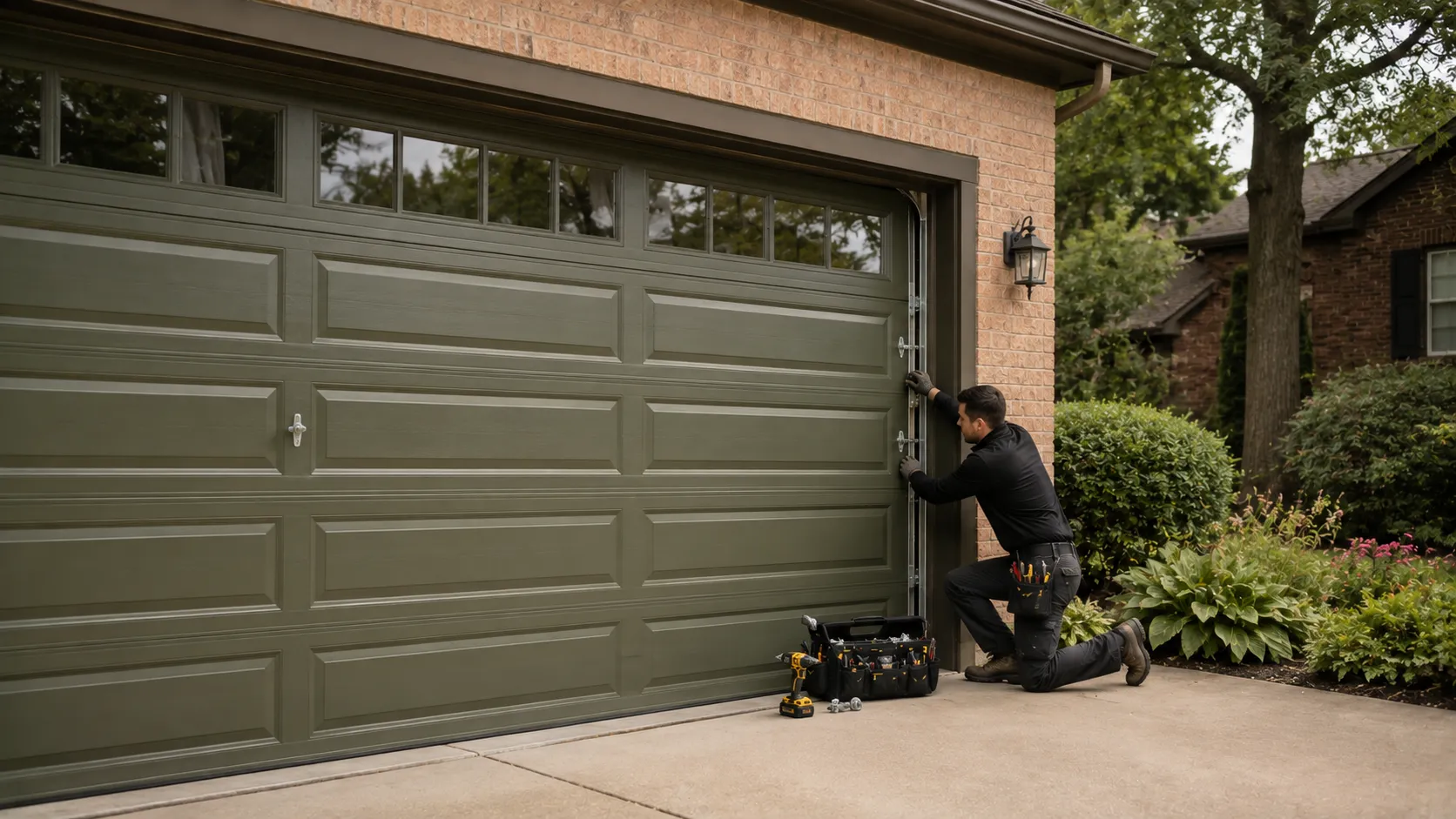
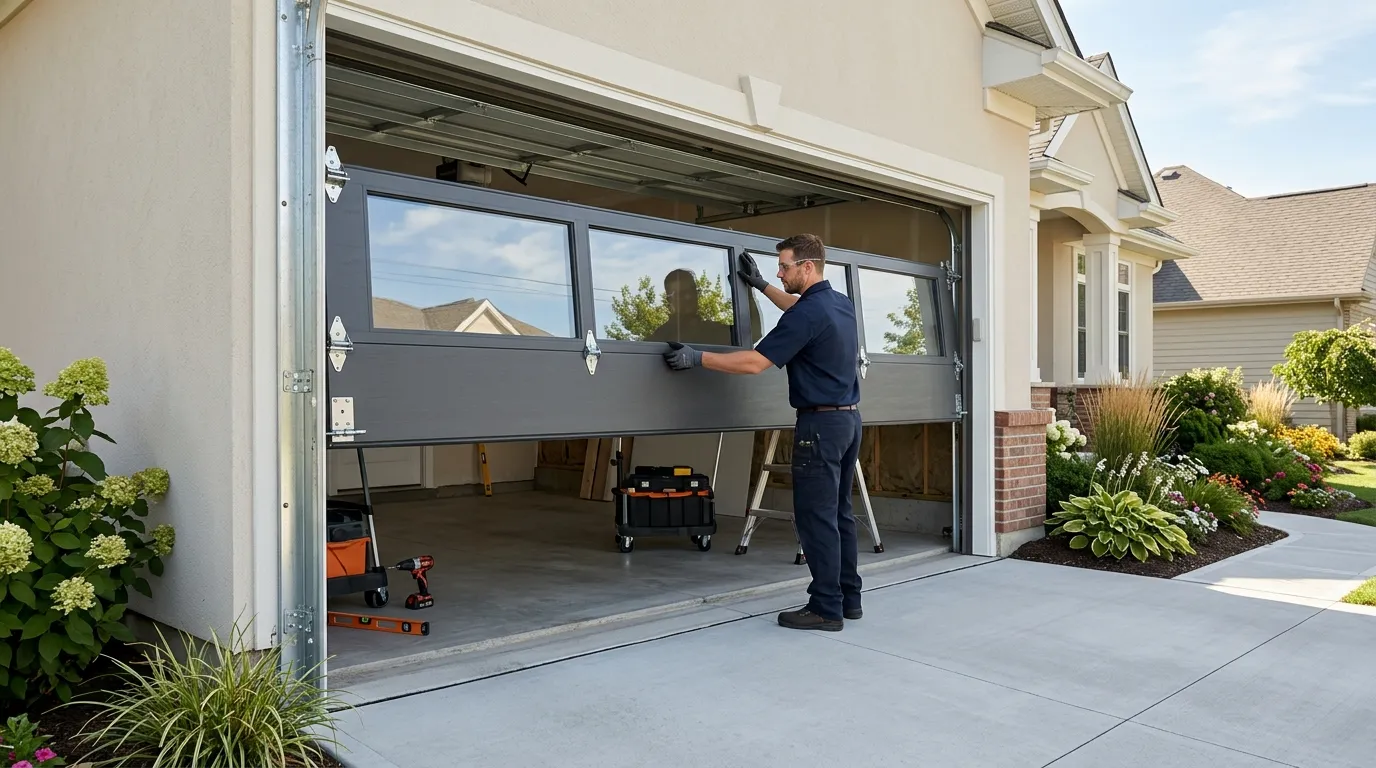
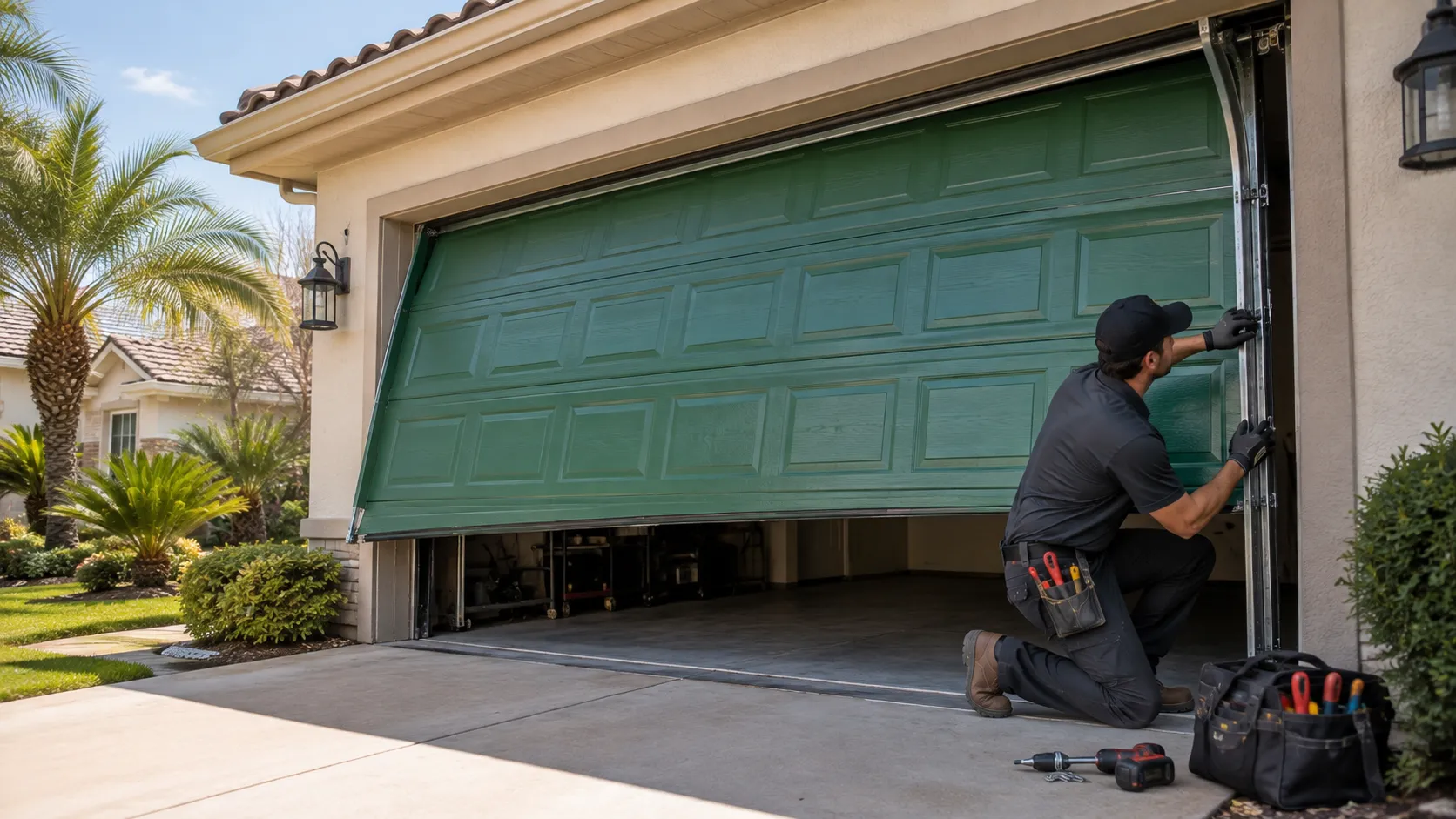
That's the fault we see on this side of the service area more than the older pockets: not a snapped spring so much as a door that's gone out of square because the bracket it hangs from has shifted a few degrees since 1986 and nobody noticed until the door started binding on one side. It's a different repair than what we do on a 1960s door, and it starts with checking the frame before we touch anything that moves.
What It Costs
We don't quote a number without seeing the door, and we're not going to put one here that doesn't hold up across every bay size and every fault. What we can tell you is what drives the decision in Tye specifically. With a median household income of $54,038 here - lower than the $63,683 median across the wider service area - most of the owners we talk to want the repair that gets the door back in service first, and they ask about replacement only once repair costs start climbing toward what a new operator or a full section run would cost.
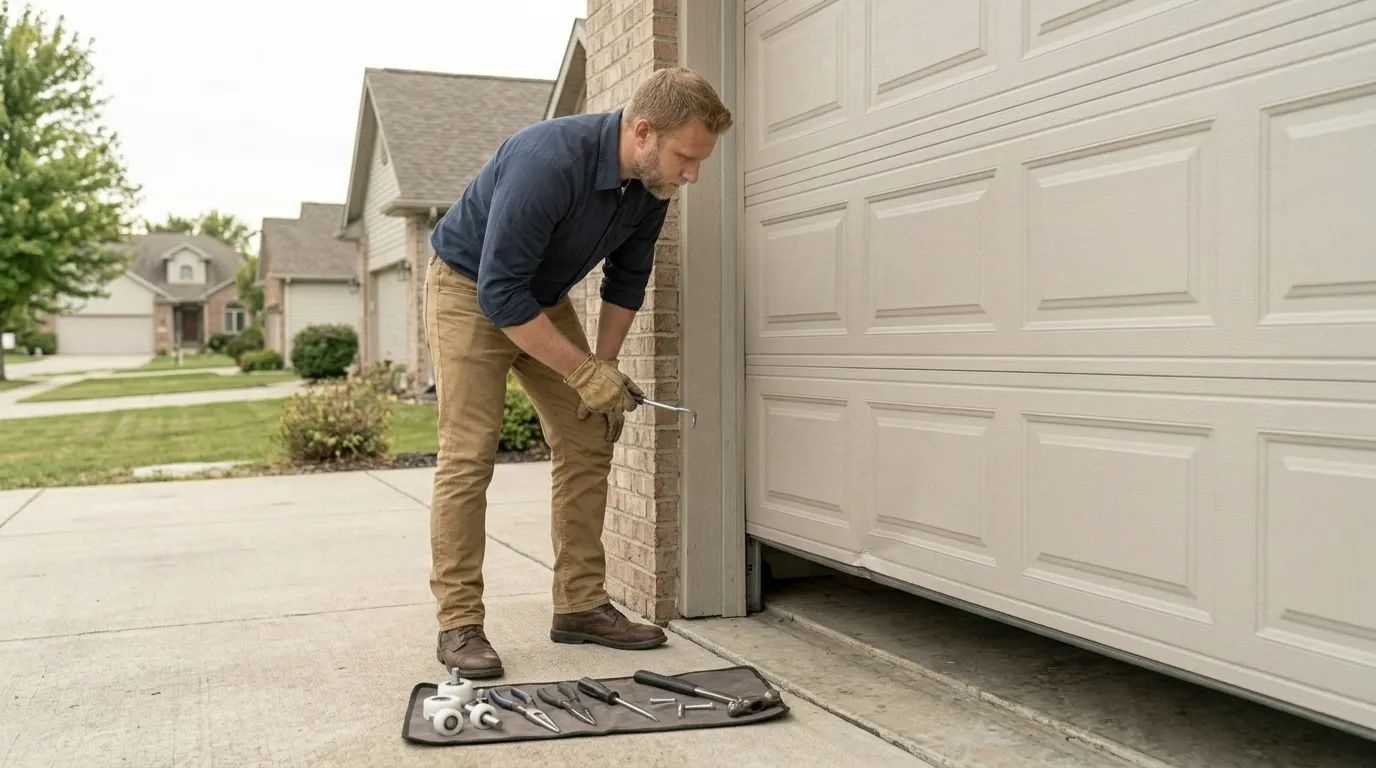
That's a reasonable way to think about it. A spring, a cable, or a set of rollers is a straightforward repair regardless of the building's age. Bracket and frame work on original 1986 hardware costs more simply because it takes longer to diagnose and sometimes requires an ordered part instead of one off the truck. We'll always tell you which category your job falls into before we start, not after.
Booking a Visit
We run out of Abilene, and Tye is about 8 miles out - one of the shorter drives on our list of towns. We don't keep a branch or a depot in Tye itself, so a job here gets scheduled the same way any other call in the service area does: we book a time, the crew drives out, and the truck carries the same stock of springs, cables, rollers, and hinges it would carry to any other stop.
For a commercial bay, it helps if you can tell us the door's approximate age and whether it's a manual or motorized unit before we come out - that lets us load the right operator or bracket stock ahead of time instead of guessing on site. If the fault turns out to be in original hardware from the building's construction rather than something that's failed from normal wear, we'll flag that on the visit and talk through whether it's worth ordering the part or replacing the section outright.