Booking a Visit
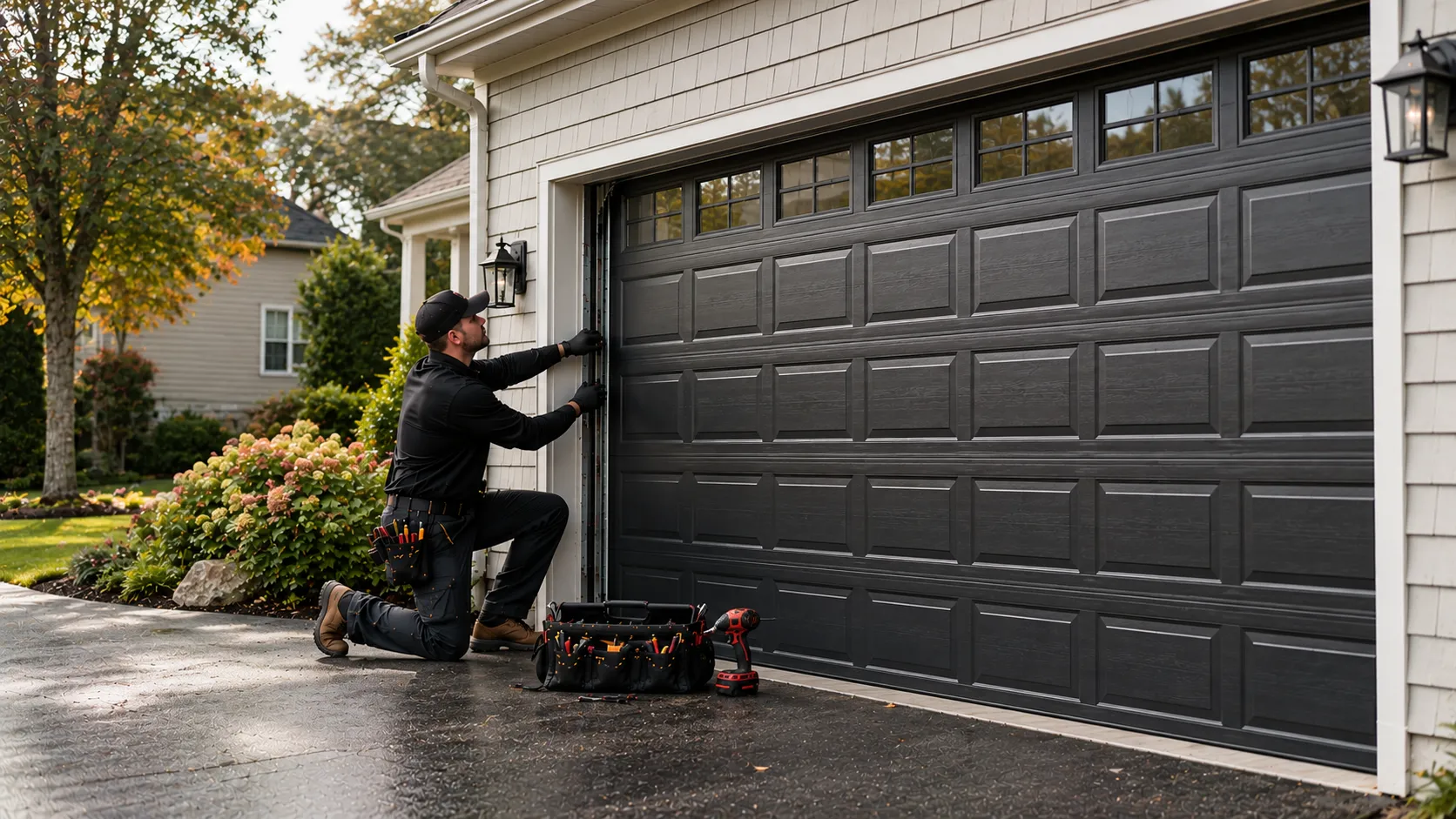
Merkel doesn't have its own crew or depot - every job here rides a truck out of Abilene, 16 miles down the road. That's not a knock on the town, it just means the schedule works in windows, not walk-ins. When you call, tell us what the door is doing (won't open, won't close, grinding, off track) so the truck that comes out is loaded with the right spring and hardware rather than making a second trip.
Merkel's commercial base is small. With around 914 households in the town, most of the buildings we get called to are single-bay shops, a feed store, a small shop front, maybe a metal building out past the edge of town - not a strip of ten units sharing one loading dock. That scale matters for scheduling: we're usually doing one door, not a route of six, so we can often work you into the same swing that covers the rest of the Abilene service area.
See /near/merkel/ for how this fits the wider coverage area, or /commercial-garage-door-abilene-tx if you want the full rundown of what we do on the commercial side.
What the Fix Involves
On a commercial door from this era, the fix is almost never just the spring. If the torsion spring on a door this old has gone, the cable drums, the bearing plate, and often the cable itself have taken wear too, and swapping only the spring means a callback in a year. We size the whole assembly for the door's actual weight and cycle rate, not just what matches the old parts.
A lot of these doors are wider than a standard residential door - sized for a truck bay or a wide storefront - which means higher-tension springs and, sometimes, two springs instead of one. That's a job that needs the door fully unloaded and blocked before anyone touches the winding bar; a spring at that tension let go carelessly can do real damage.
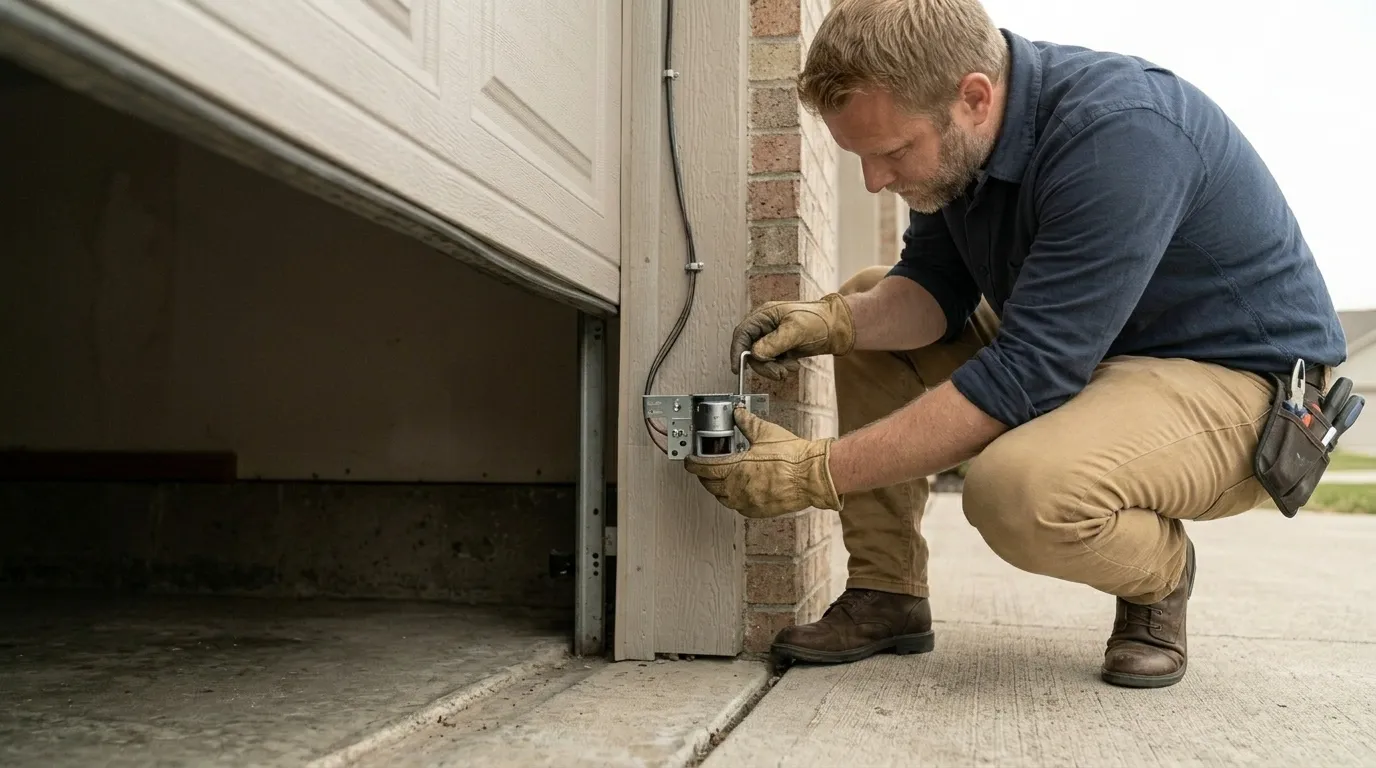
Where the opener is also original, we'll check whether it's worth keeping. A 1960s-era chain drive that's still running is often stronger than what gets sold today, but the gear sets wear, and once the reversing safety no longer trips reliably, that's not a repair we'll patch - it gets replaced, full stop. That's one place we won't cut a corner to save a callback fee.
How It Shows Up
The most common call is a door that's gotten heavy to lift by hand or that the opener strains against - a sign the spring has lost tension gradually rather than snapped outright. You'll notice it as a door that used to swing up easily now needing a shove, or an opener that groans and stalls a few inches off the floor.
Another pattern on the older commercial doors: one side of the door sits visibly lower than the other when it's down, or the door runs crooked in the track on the way up. That's usually a cable that's stretched or a drum that's slipped, not the spring itself, and it's worth a call before the door jumps the track entirely.
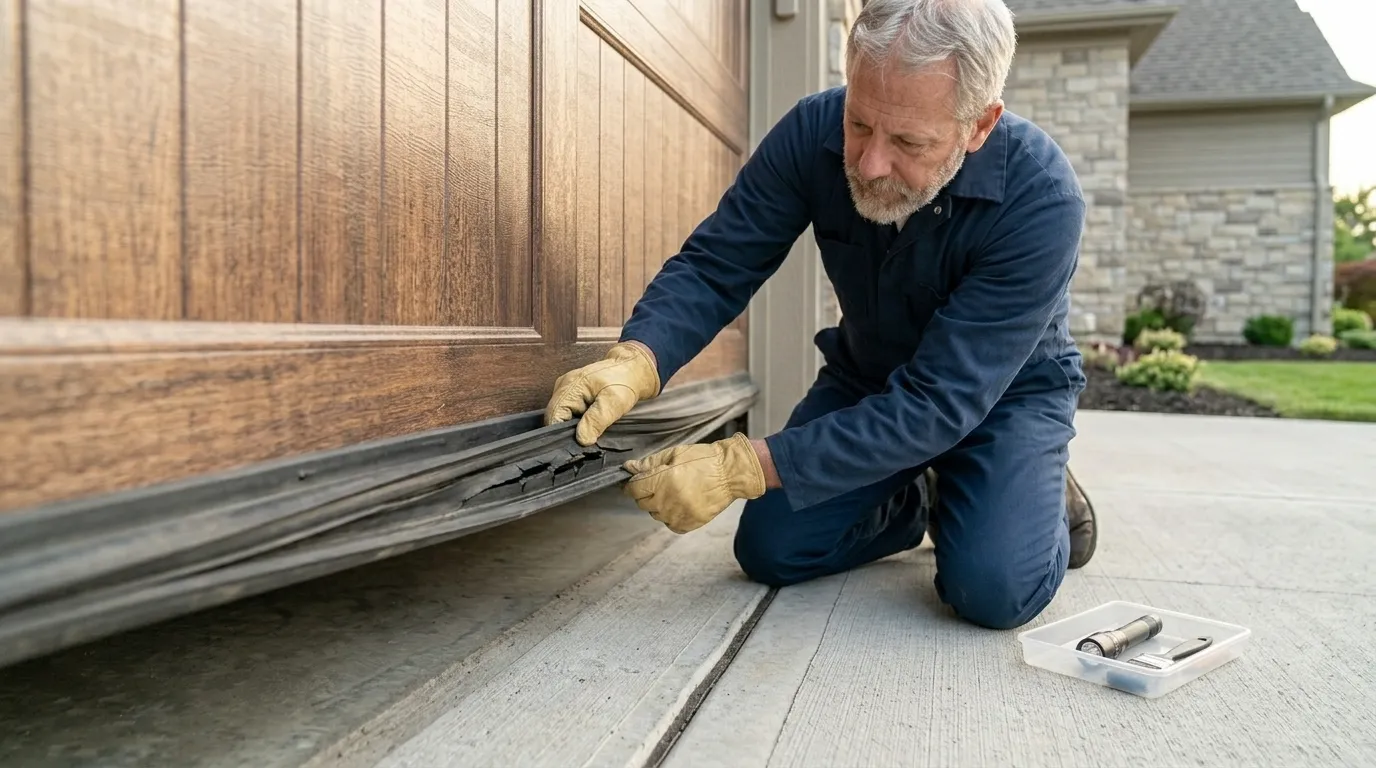
Rust at the bottom panel or around the track anchors is common enough on buildings from this era that have sat through a few decades of cold-moderate winters. On its own that's cosmetic. Combined with a stiff or crooked door, it usually means the whole bottom section needs replacing rather than just patching the rust through.