Booking a Visit
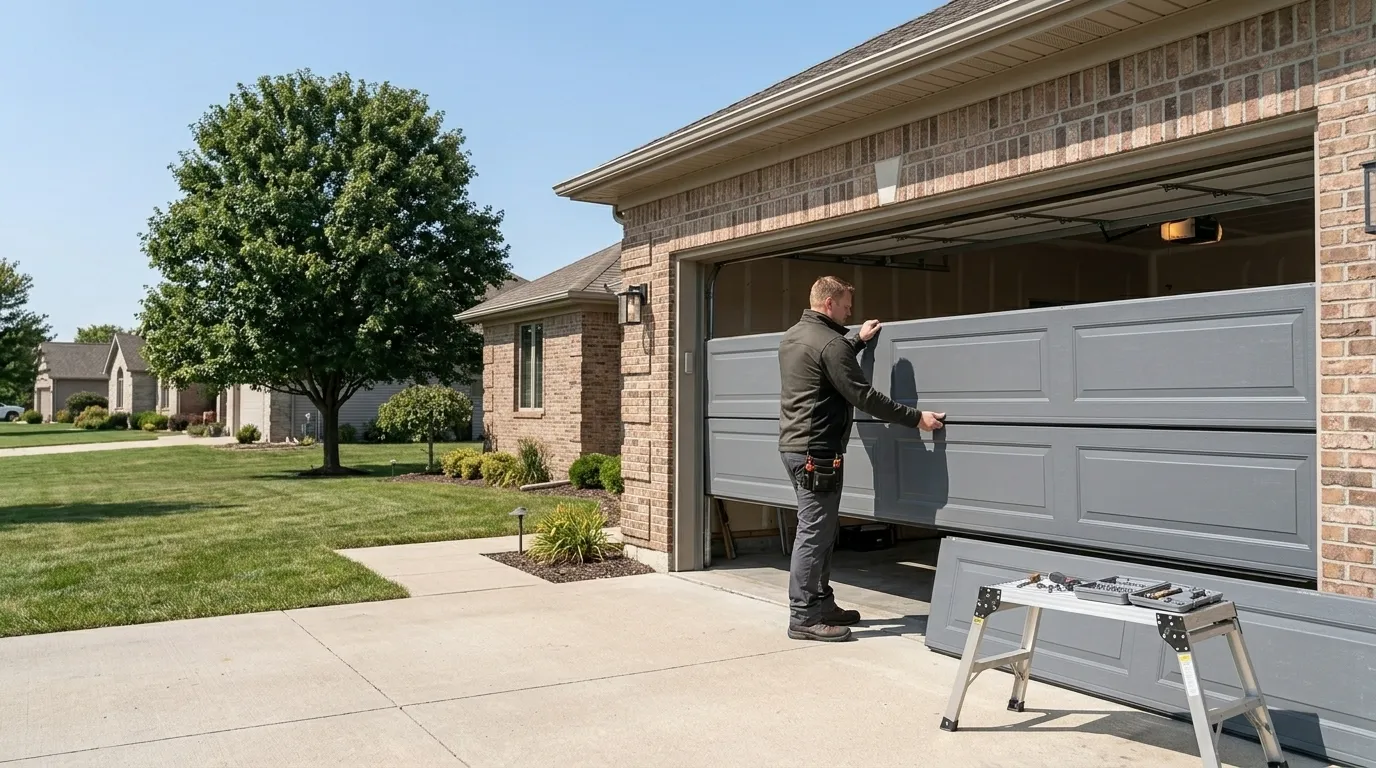
Merkel sits about 16 miles out from Abilene, farther than most of the named areas we cover on a given day. That distance changes how a call here actually works: we're not swinging by on the way to somewhere else, we're routing a truck specifically for your job. It means we ask more up front - what the door is doing, what it sounds like, whether it's moving at all - so the tech shows up with the right spring size and the right opener parts already on the truck instead of driving back for them. We don't run a branch or a depot out here, so we can't promise a same-hour arrival the way a company based in town might. What we can do is get a truck out from Abilene on a scheduled visit and make sure that one trip covers the actual problem, not a guess at it. If you can send a photo of the spring or the track before we arrive, that alone often saves a second trip.
What the Fix Involves
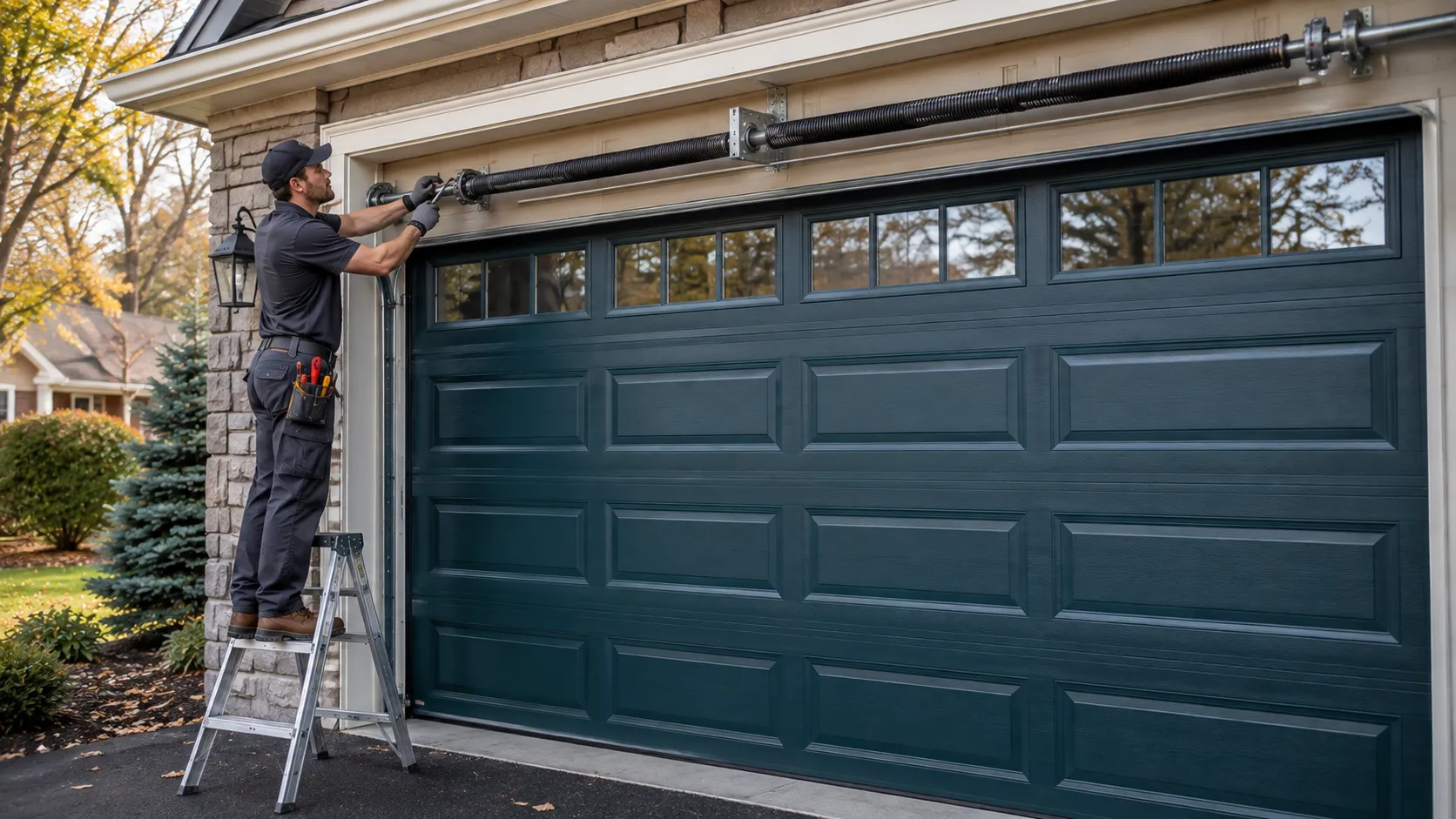
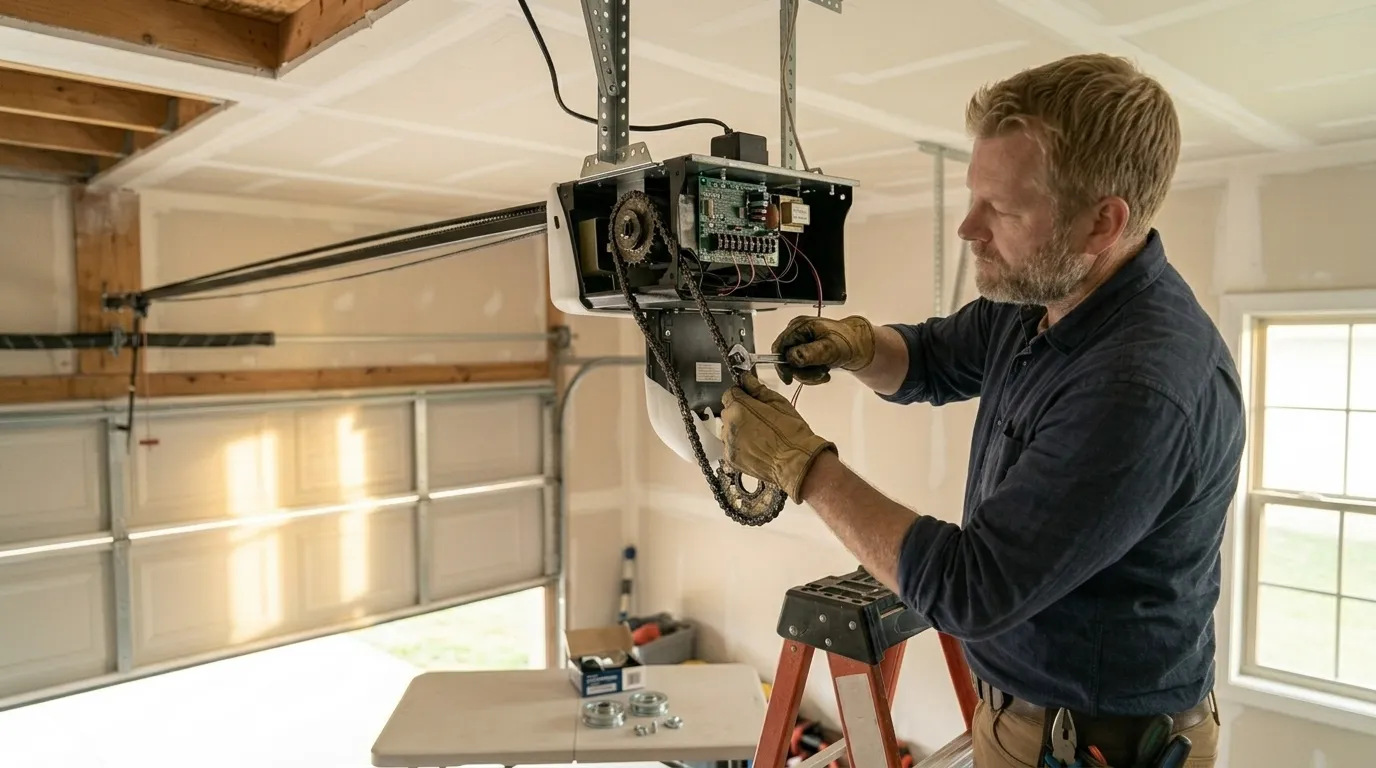
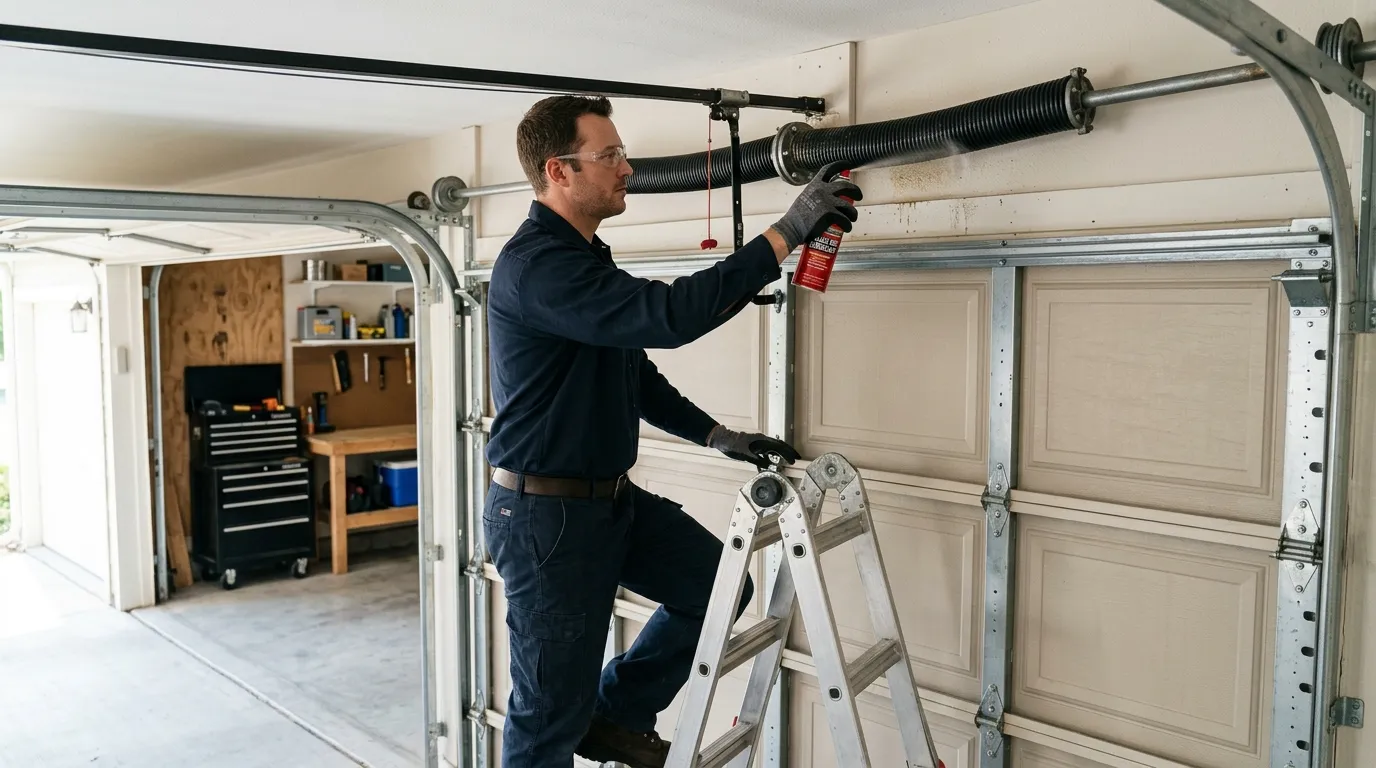
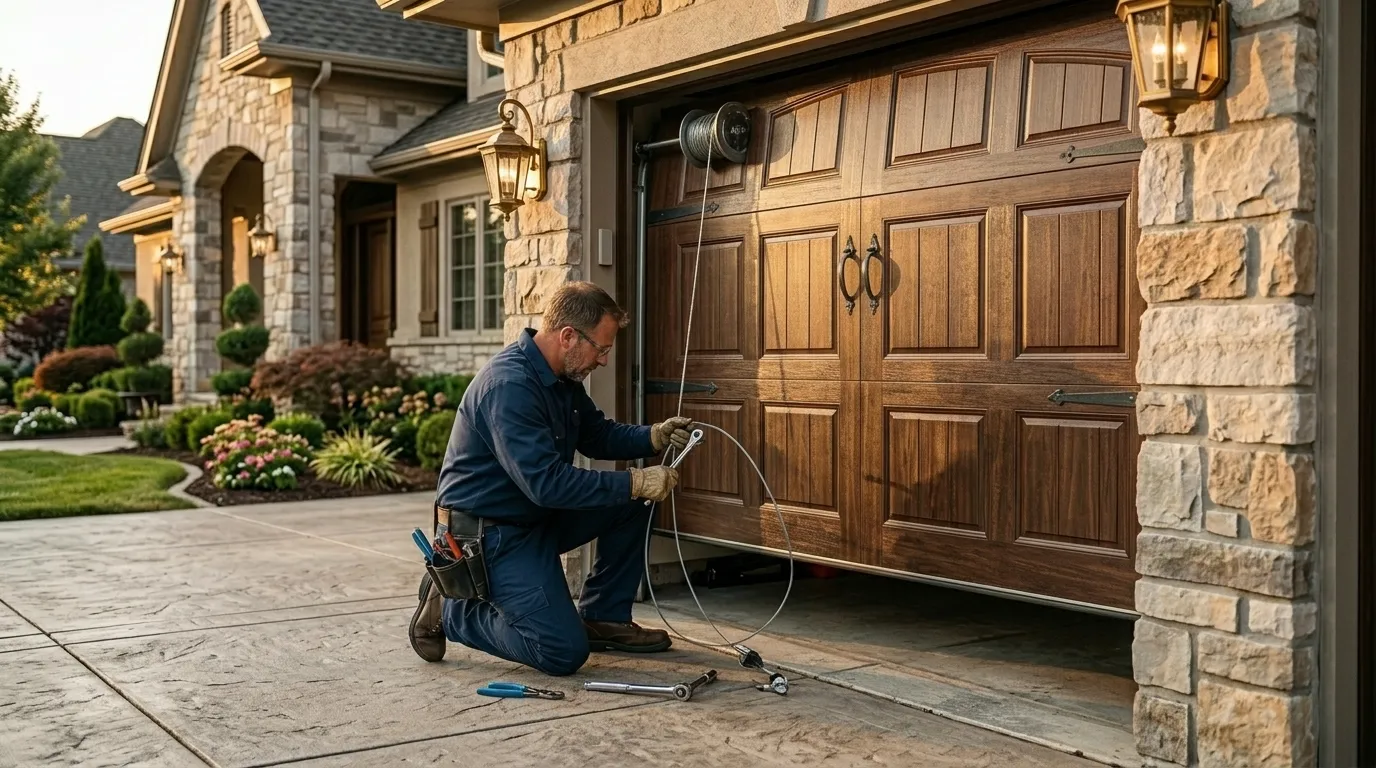
On a door this old, the fix usually starts with figuring out what's actually original versus what's been swapped at some point. Side-mounted torsion springs from a 1960s-era install often can't be matched exactly - the wire gauge and winding cone specs from that period aren't something suppliers keep on the shelf, so the tech may need to convert the mount to a modern equivalent rather than replace like-for-like. That's more work than a straight swap, and it's worth knowing that going in. Cables and rollers on doors this age are usually well past any reasonable service life regardless of how they look, so we replace those as a set rather than patch one and leave the rest. Openers are a separate question - if the motor is original, the gearing and safety sensors won't meet current expectations, and repair often costs close to what replacement does. We'll tell you straight when that's the case instead of billing for a patch that won't hold.
How It Shows Up
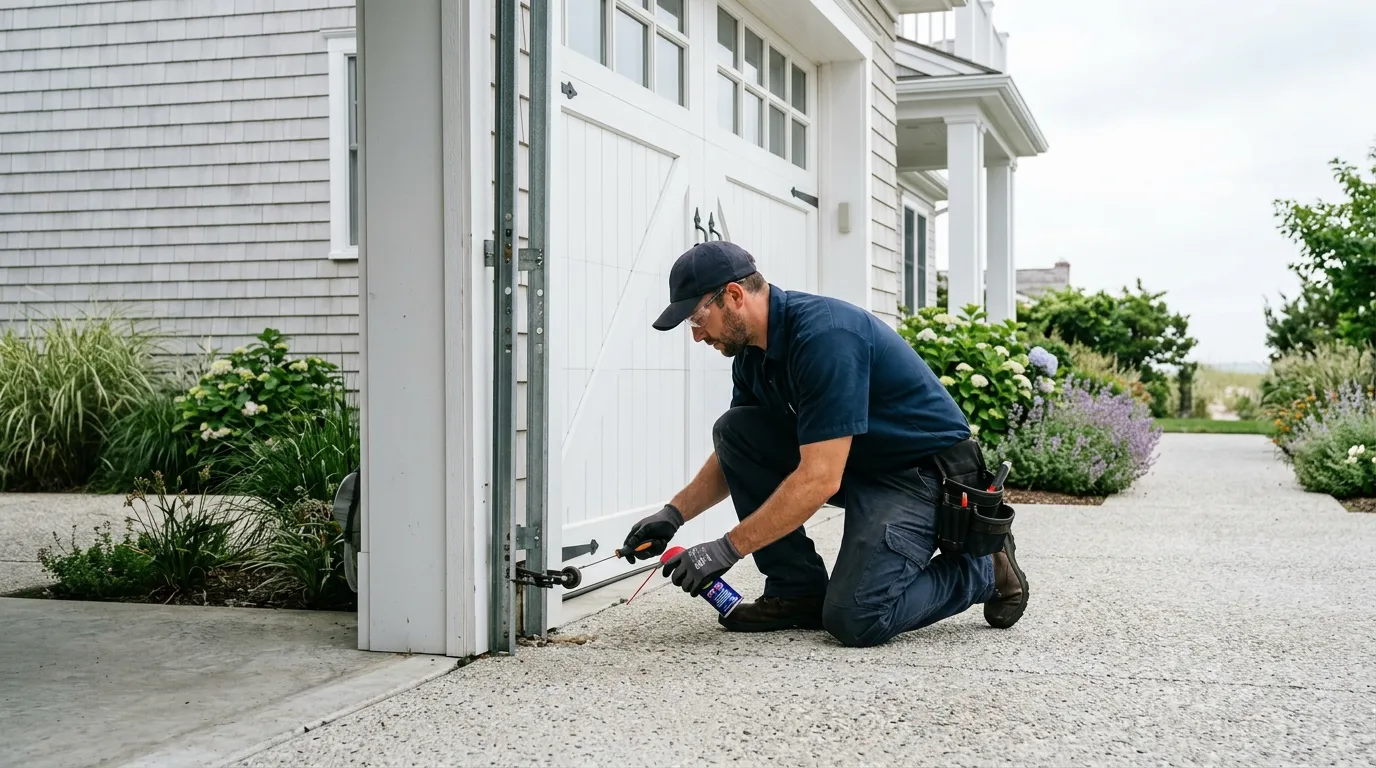
The most common call from a Merkel address is a door that won't move at all, or one that moves a few inches and stops - both point to a broken or badly worn torsion spring on hardware from that older 1960s build era. A close second is grinding or popping from the track side, which on a door this old is usually a roller that's outlived its bearing, not just noise. Some owners notice the door closing unevenly, one corner dropping faster than the other - that's a cable stretched or frayed unevenly on original side-mount hardware, not something that fixes itself with lubricant. If the opener runs but the door doesn't lift, that's a separate failure, usually the drive gear inside a motor that's older than the warranty language it came with. None of these are emergencies in the sense of danger, but a spring under tension that's failed should not be forced by hand.