Booking a Visit
We don't keep a truck parked in Merkel. Abilene Garage Door Pros runs out of Abilene, and Merkel sits about 16 miles out, so an opener installation here gets scheduled as its own trip rather than something we squeeze in on the way past. That means we ask a few more questions up front - door weight, ceiling height, whether the current opener still runs at all - so the truck that shows up has the right unit and the right bracket kit on it the first time. We'd rather spend five minutes on the phone confirming details than burn a trip because the header clearance turned out wrong. If you're on a working opener that's just gotten loud or slow, that's still worth a call; a lot of what we replace in Merkel hasn't failed outright, it's just old enough that parts for it don't exist anymore.
What the Fix Involves
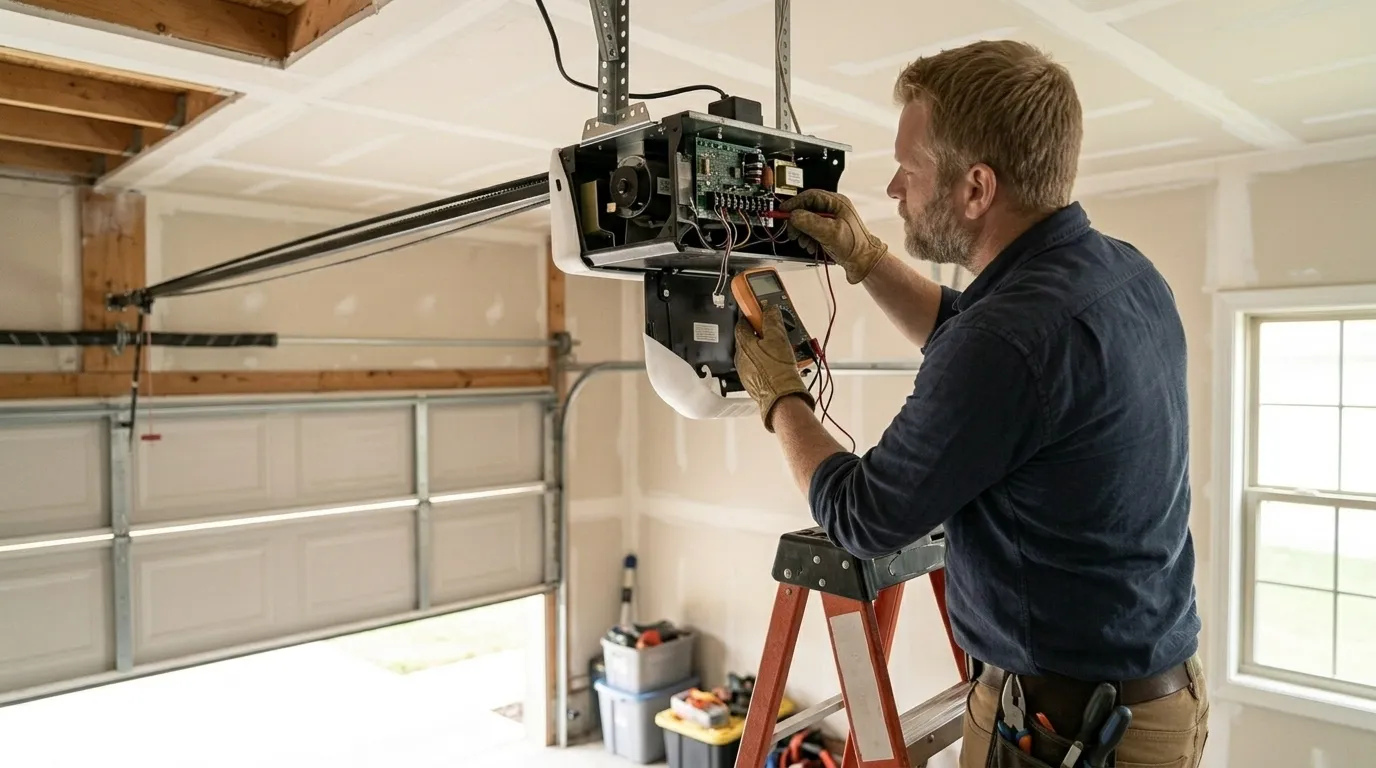
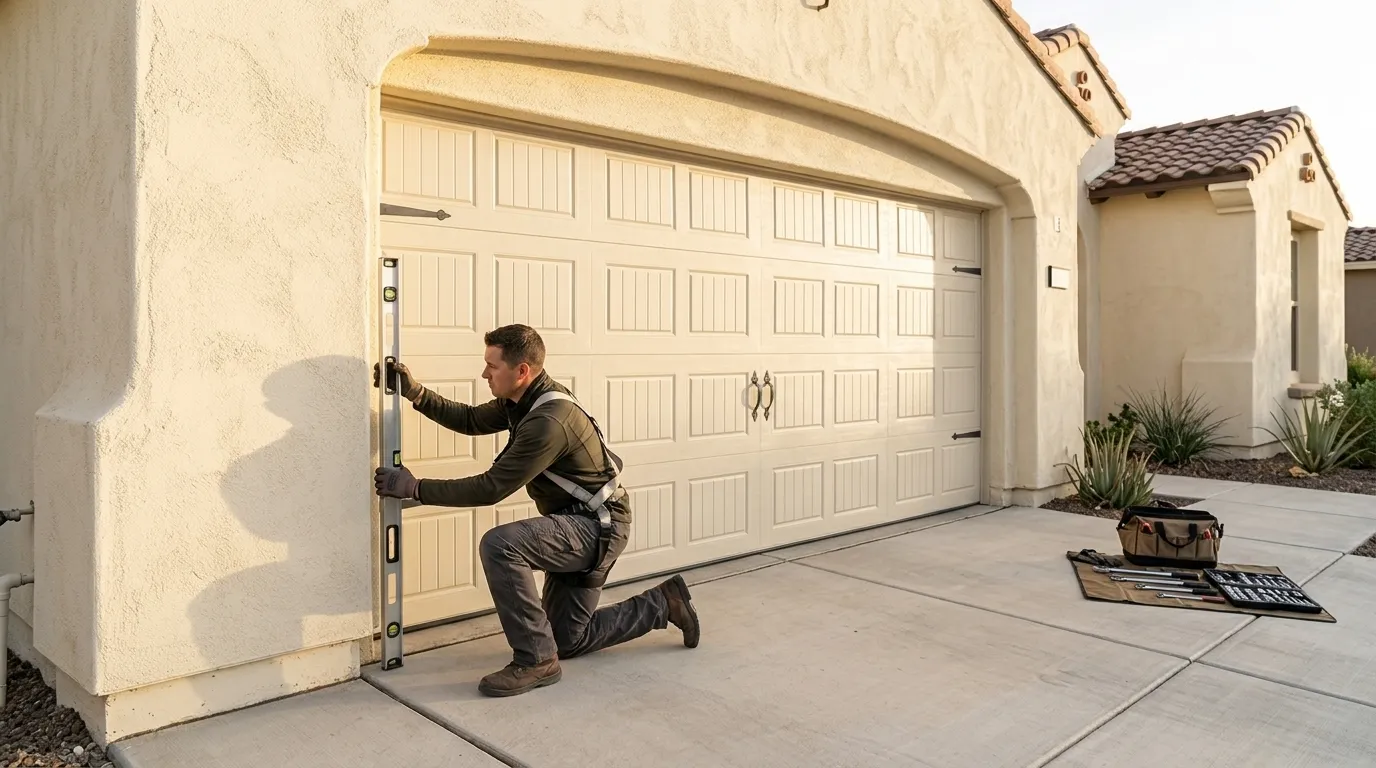
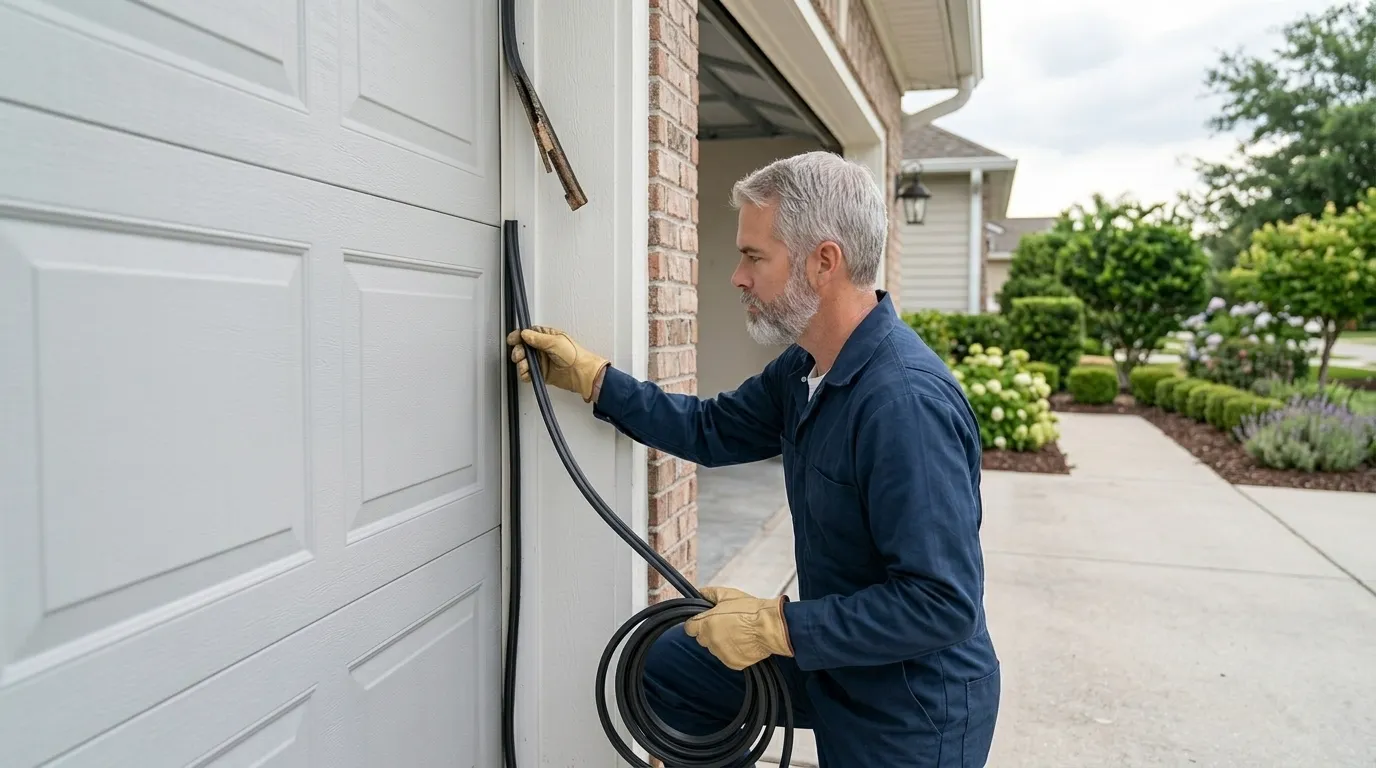
An install on a 1963-era Merkel garage starts with the header, not the opener. Framing from that build year is often narrower than what newer opener brackets assume, so we measure clearance before we quote a unit rather than after. We check horsepower against the actual door - a lot of these are heavier wood or steel replacements hung on frames sized for a lighter original slab - and we run new sensor wiring since older houses frequently have none at all. Cold-weather performance matters here too: this is a moderate-cold climate zone, so we set opener force limits accounting for a door that's stiffer on a 20-degree morning than in July, rather than a factory default tuned for a milder region. We also replace the mounting hardware rather than reuse original brackets bolted into 60-year-old framing - that's not optional, it's the part that keeps the unit from working loose within a year.
How It Shows Up
The calls from Merkel tend to follow a pattern. The door starts reversing partway up for no clear reason, or the opener runs but the door lags a half-second behind the motor like the chain's stretched. Sometimes it's simpler: the remote works from the driveway but not from the street, or the wall button does nothing and the only way in is the manual release. On original 1963 hardware, we also see openers that still run fine but have zero safety reversal - the door just keeps closing into whatever's in the way, which is the exact failure the post-1990s codes were written to stop. None of these on their own means the opener is dead, but taken together on a unit that old, they usually mean the motor, the logic board, and the sensors are all past the point where individual repair makes more sense than replacement.